

Kurt Uhlir is a Chief Marketing Officer, growth operator, and speaker known for scaling companies through modern go-to-market systems and disciplined execution.
He is known for taking the playbooks he helped shape with multi-billion-dollar global enterprises and applying them to growth-stage and mid-market companies, turning them into lower-risk, repeatable growth systems. His experience includes helping lead an $880M IPO, building and running businesses to more than $500M in annual revenue, assembling teams across six continents, and participating in dozens of acquisitions.
He is sought out for board and senior leadership roles that reflect a level of operating credibility most marketing leaders never reach, and has been asked to advise a sitting President of the United States.
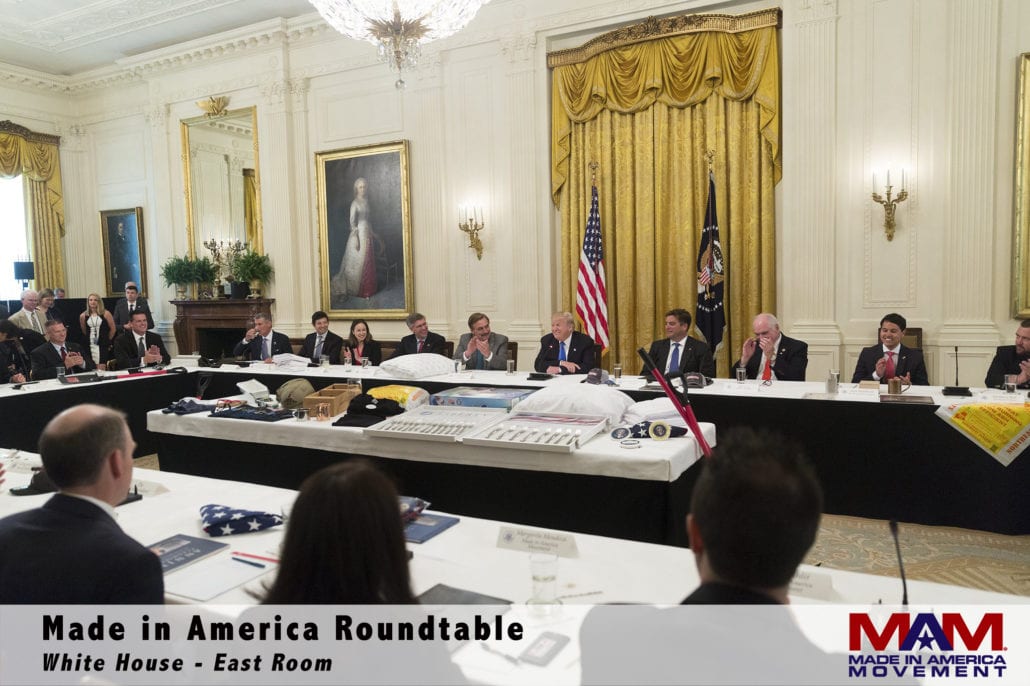
Kurt is frequently quoted and featured as a commentator in national business and technology media, including Wired, TechCrunch, USA Today, NBC, and ABC. His speaking experience spans the United States and Europe, including PPAI, GDC, private company and leadership team workshops, and the White House.
Kurt’s leadership perspective is not theory. He treats servant leadership as a business advantage that drives performance, clarity, and trust at scale. His business case for servant leadership has been downloaded more than 200,000 times, and his work consistently connects leadership behavior to measurable outcomes.
Fundamentally, Kurt is focused on building companies where people perform at a high level and grow as leaders. Outside of his operating roles, he invests time mentoring leaders and teams who want to build durable, high-performing organizations.




















Formation: Discipline, Systems, and Endurance
Sitting was never an option for Kurt.
He grew up in a household where discipline, curiosity, and output were assumed, not negotiated. His father worked at Bell Labs – the Apple, Amazon, and Tesla of their era – and was part of an environment responsible for some of the most important inventions of the 20th century. Long before “systems thinking” became a buzzword, Kurt was exposed to how complex systems were designed, tested, and improved over time. It wasn’t uncommon for his father to wake him up at 3am to work on a project or head out on a spontaneous “field trip.” Technology didn’t just exist in the house – it was explored, questioned, and taken apart.
While his father fed curiosity, his mother set the pace.
She grew up picking cotton in northern Alabama to pay for her school clothes before becoming an orthopedic nurse. Work was not something you negotiated with. It was something you finished. From her, Kurt learned a principle that would later define how he approached companies, teams, and leadership:
“You don’t stop when you’re tired – you stop when you’re done.”
Each accomplishment simply became the new baseline. Each new challenge raised the expected level of effort.
For years, Kurt got up at 4 a.m. to train.
In high school, he began winning nearly every race in his hometown, but his father, Kent, knew there was more there. He tracked down the coach who trained Olympic runner Steve Spence and prepaid for Kurt’s first months of training. That decision changed Kurt’s pace permanently — not just on the track, but in how he approached effort, preparation, and recovery.
Kurt went on to compete in cross-country, indoor track, and outdoor track at Vanderbilt as a Division I athlete. He believes that experience — measured training, accountability to teammates, and sustained performance under pressure — shaped how he later built teams and ran organizations.
As Kurt has said in one of his talks:
“I think most of us far underestimate what we can do in the medium-to-long run. Every time I’ve gone through a crunch period, I realize that I hadn’t really been working to the level I was capable of. It resets what’s normal.”
That combination – deep exposure to systems and an uncompromising work ethic – normalized intensity early. Effort wasn’t performative. Discipline wasn’t motivational. It was structural. Problems were meant to be worked through, not worked around.
Those early years quietly formed the endurance and judgment that would later show up in much higher-stakes environments: global teams, complex organizations, and moments where decisions carried real consequences. Long before titles or roles entered the picture, Kurt learned how to operate when effort is assumed, standards are high, and quitting isn’t part of the equation.
Learning Fast: Building, Breaking, and Seeing Patterns Early
It was all but inevitable once Kurt’s father brought home an Apple IIgs when he was eleven.
They had recently moved to Guntersville, Alabama, and Kurt was spending as much time as possible with his father around Redstone Arsenal (38,300 acres Army installation housing NASA’s Marshall Space Flight Center, the Army’s Aviation and Missile Command, the Missile Defense Agency of the Department of Defense, and a number of DOD contractors) – an environment where aerospace, defense, and applied science weren’t abstract concepts but operational realities. With the Apple IIgs at home, experimentation accelerated. Kurt began coding his first games and quickly moved on to pushing systems until they failed.
Curiosity sharpened into pattern recognition.
Kurt learned early that pressure doesn’t make systems stronger – it reveals where they break. Well-designed systems fail in predictable ways. Poorly designed ones fail chaotically. That lesson showed up everywhere: in software, in incentives, and in people. Breaking things wasn’t the goal. Understanding failure modes was.
That instinct extended beyond code.
As a teenager, Kurt pushed boundaries in more than one direction – including learning firsthand how institutional systems responded when stressed. At the same time, he started contracting landscaping work with neighbors and hiring friends to do the labor. One side taught him how systems fail. The other taught him what happens when people miss expectations, cut corners, or rise to responsibility. Both were formative.
In college, Kurt carried those lessons forward. He founded Clear Vision, selling websites and hosting to insurance offices, law firms, and financial planners while consolidating a growing set of parallel coding projects. A handful of clients became dozens. Dozens became hundreds. The business produced steady free cash flow and, more importantly, fast feedback. Ideas either held up under real constraints or they didn’t.
What mattered most during this period wasn’t success or failure – it was learning velocity.
Kurt saw repeatedly how ideas behaved once they met resistance. Some scaled. Some stalled. Others collapsed quietly despite looking strong on the surface. Over time, a durable mental model emerged: leading indicators matter, incentives shape behavior, and systems tell the truth faster than stories do.
By the time Kurt completed his graduate work in financial risk, he was clear about one thing: he still had a lot to learn – and the fastest way to learn was to put himself inside environments where decisions had larger consequences, patterns repeated at scale, and failure wasn’t theoretical. That clarity shaped the next move in his career.
Inventing Systems That Survive the Market
NAVTEQ was where theory stopped being interesting.
When Kurt joined the company, it sat at the center of multiple industries that were beginning to collide: automotive, logistics, consumer electronics, mapping, gaming, and advertising. The company was global, mid-market, and moving toward an $880M IPO and later $8.1B acquisition by Nokia. For Kurt, it became a rare operating environment – one where the same underlying systems repeated across entirely different industries, and where decisions were tested at scale, inside a business that grew from $85M in annual revenue to more than $1.4B.
The work moved fast and wide.
On any given day, Kurt could step out of a meeting with Siemens VDO, which was building in-car navigation systems for Lexus, and walk directly into discussions with Garmin, UPS logistics, or Microsoft’s video game teams. Different customers. Different incentives. Different constraints. The same structural questions followed him into every room.
That exposure changed how Kurt thought about invention.
Ideas don’t live in isolation. They have to survive procurement cycles, hardware constraints, data quality issues, regulatory pressure, and partner dependencies. Many strong ideas failed quietly once they hit the market. Others succeeded only after being reshaped by real-world friction. Watching that process repeat across industries made one thing clear: invention without adoption is noise.
Kurt’s work increasingly focused on building systems that could withstand that friction.
During his time at NAVTEQ, Kurt worked on inventions that would later become foundational across spatial data, location-based services, advertising, gaming, and related systems. Each one was stress-tested by partners, customers, and markets that didn’t care about elegance – only whether the system held up once deployed.
That process reinforced a lesson Kurt had been forming for years: the market is the final arbiter of truth.
Some inventions scaled because they aligned cleanly with incentives and workflows. Others failed because they assumed behavior that didn’t exist or conditions that couldn’t be sustained. NAVTEQ provided a front-row seat to that reality at global scale – across continents, industries, and use cases.
Over time, Kurt began to recognize that the same forces shaping invention were shaping organizations themselves. Systems either absorbed pressure or fractured under it. Teams either aligned around incentives or drifted. Leadership decisions either compounded or created drag. The parallels were impossible to ignore.
That insight didn’t pull Kurt away from invention. It reframed it into controlled business risk.
He began treating invention as a discipline rooted in adoption, incentives, and execution, not novelty. That perspective would later shape how he approached marketing, go-to-market strategy, and leadership – focusing less on what could be built and more on what would survive once released into the world.
Controlled Risk and Judgment Under Pressure
Risk doesn’t scare Kurt. Unexamined risk does.
Long before he was making decisions inside complex organizations, Kurt learned that pressure doesn’t reward confidence or bravado. It rewards preparation, awareness, and restraint. Growing up, he spent years on high-angle and scuba rescue teams, often called in when situations had already gone sideways and clean decisions still mattered. Those environments taught him something most leadership books gloss over: panic is contagious, discipline is stabilizing.
That lesson stayed with him.
During his years at NAVTEQ, while working full-time inside a rapidly scaling, global company, Kurt trained nights and weekends with professional stunt performers. It wasn’t a career move. It was a discipline. Fight choreography has no margin for miscommunication. Everyone has a role. Everyone has timing. If one person improvises, someone gets hurt. You don’t eliminate risk – you contain it through clarity and repetition.
That same period also included becoming a certified alligator handler – another environment where misreading behavior or skipping protocol isn’t forgiven. These weren’t adrenaline pursuits. They were controlled systems where respect for constraints determined outcomes.
Over time, Kurt recognized the parallel.
High-growth companies operate under the same rules. Risk is unavoidable. What separates durable organizations from fragile ones is whether leaders understand which risks to absorb, which to hedge, and which to eliminate entirely. Teams fracture when assumptions go untested. Systems fail when incentives are misaligned. Pressure doesn’t create these failures – it exposes them.
By the time Kurt began leading larger initiatives and teams, judgment under pressure wasn’t situational for him. It was trained. He didn’t default to speed or caution. He defaulted to clarity, preparation, and decision-making that holds up when things get loud.
Choosing Leverage
By the time Kurt left NAVTEQ, one pattern had become unmistakable: his impact multiplied fastest when he was operating inside complex systems, not just creating new ones.
He joined Vitrue in 2011 as the company helped define social media management alongside Facebook (and Buddy Media). The work was deeply operational. Teams were scaling. Categories were forming in real time. The Vitrue SRM collectively managed more than one billion social relationships in over 100 countries. Decisions needed to hold up across product, sales, partnerships, and leadership. Vitrue was acquired by Oracle for more than $300 million, reinforcing a lesson Kurt had already internalized: growth rewards people who can align systems and people under pressure.
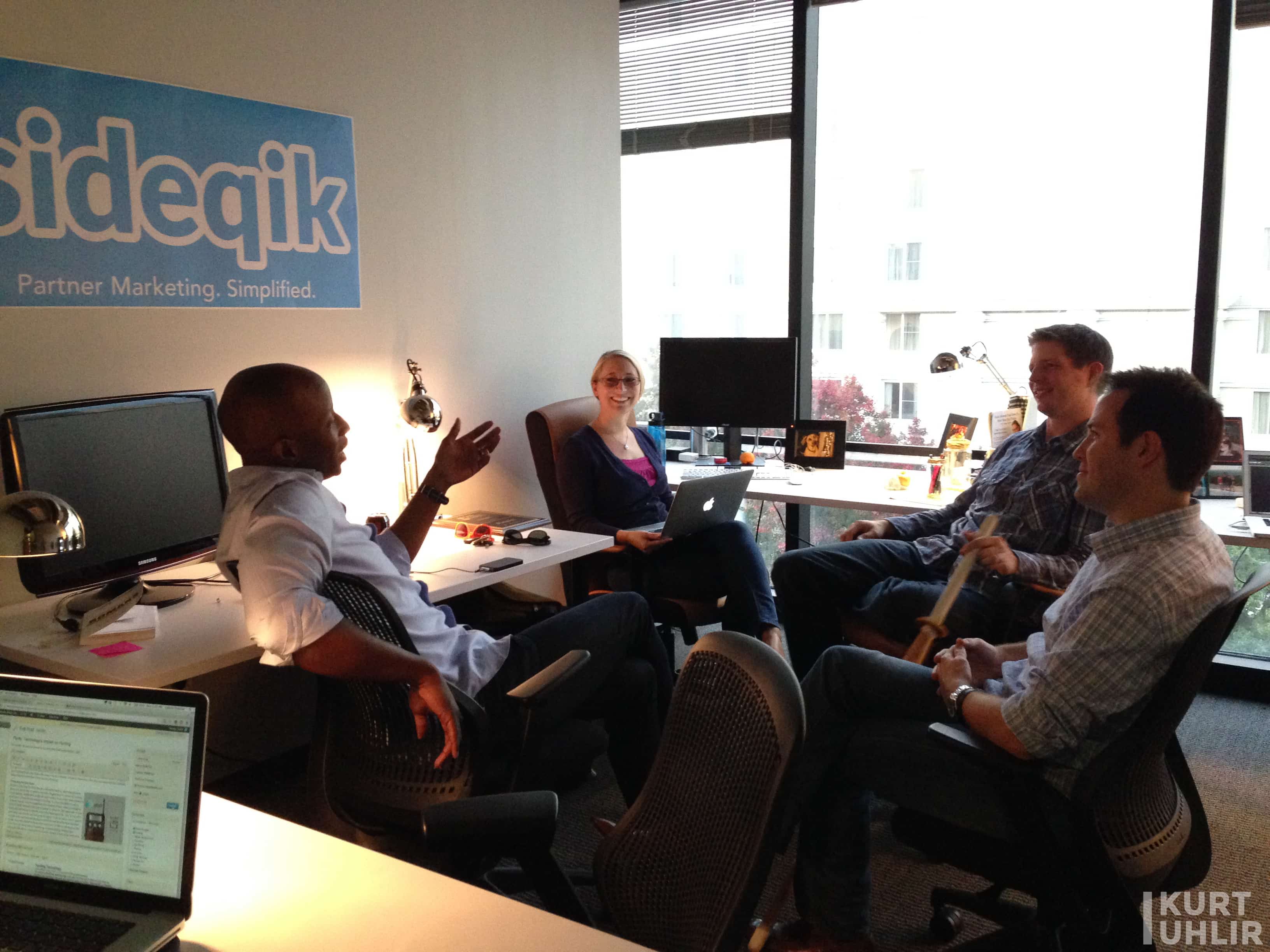
After the acquisition, Kurt co-founded Sideqik, one of the first influencer marketing platforms. As CEO, he optimized marketing, sales, operations, and customer success, led the go-to-market strategy, raised $1M in early financing, and grew annual revenue to $1.3M within 18 months of launching the SaaS product. The company worked with brands including CBS Interactive, Harmonix, and Supply.com, and was positioned for a profitable acquisition.
Sideqik didn’t change Kurt’s trajectory. It clarified it.
He could build from zero. He could raise capital. He could lead as CEO. What stood out was something else: he consistently created more value helping others scale than needing to be the one at the top of the org chart. Kurt realized he enjoyed being a king-maker or queen-maker – building leaders, teams, and systems that outperformed without requiring him to be the bottleneck.
Peter Thiel talks about “zero to one.” Kurt learned firsthand that the skills required to start a company are not the same ones required to scale it, and that his highest leverage came once teams, systems, and decisions had to hold up under growth. While many leaders can start, far fewer can sustain growth without breaking culture, execution, or trust. That understanding shaped the roles Kurt chose next and how he approached leadership once scale became the constraint.
That leverage shows up most clearly in go-to-market—where trust, technical depth, and system design determine whether a company earns demand or burns capital.
Scaling Through Strategy, Systems, and Trust
Most B2B demand generation fails before sales ever gets a real chance. Research shows that up to 70% of leads generated by most marketing teams will never close unless the company is already one of the top three brands in its category. Kurt is direct about this reality. In his experience, roughly 95% of marketers are not capable of modern demand generation that builds trust early enough to win those deals, and most CMOs do not even realize this constraint exists.
Kurt treats go-to-market as a commercial system, not a collection of tactics. Modern buyers form opinions long before engaging sales. If marketing is not shaping belief, confidence, and category position upstream, downstream optimization cannot recover the deal. Kurt designs marketing systems that influence how buyers think, not just how they click.
His work centers on contribution, not attribution. A $5M customer does not close because of one channel or one campaign. It closes because the company earns confidence across dozens of touchpoints that attribution models routinely misread. Kurt builds systems that make that confidence compounding over time: clear narrative, disciplined demand generation, and a buyer experience that aligns what marketing signals, what sales promises, and what product delivers.
This approach was already in motion before public-company scale entered the picture. Kurt joined Showcase IDX as Chief Marketing Officer roughly a year prior to its acquisition, where he sharpened positioning, systemized demand generation, and helped prepare the business for scale. Following the acquisition, he was promoted into a dual role as Chief Marketing Officer and acting General Manager. While this represented a small portion of his time post-acquisition, Kurt played a critical role in packaging the business, developing leadership depth, and supporting the deal process that ultimately led to Showcase IDX being divested to another public company.
At eXp World Holdings (ticker: EXPI), Kurt operated where scale exposed weak thinking quickly. He was promoted to lead end-to-end go-to-market strategy, growth marketing, and operations across the company’s core platforms during a period of rapid expansion. During that time, the business grew from 32K agents to 89K and expanded from 4 countries to 23. The work was not about running campaigns. It was about building a growth system that could sustain hypergrowth without eroding trust, alignment, or execution quality.
That same system-level discipline turned marketing into measurable leverage. Kurt’s teams helped generate tens of thousands of referrals in a single year, driving potential billions in downstream transaction volume. He also led the rollout and go-to-market for an integrated marketing platform deployed across the agent base, saving more than 20,000 labor hours while enabling adoption at a scale where most organizations slow down.
Trust, in Kurt’s work, is an operating constraint, not a slogan. When positioning is unclear, incentives are misaligned, or teams optimize activity instead of outcomes, growth becomes fragile. Kurt designs go-to-market systems where trust is enforced structurally through consistent narrative, aligned incentives, and shared definitions of success.
Across companies, stages, and markets, the pattern holds. Kurt does not make marketing louder. He makes it decisive. He builds go-to-market systems that earn trust early, hold up under pressure, and compound over time – the conditions required for revenue growth that leadership teams can rely on rather than chase.
Operating at Scale Today
Today, Kurt serves as Chief Marketing Officer at ez Home Search, a privacy-first real estate platform used by millions of consumers each month and thousands of real estate agents and home service professionals across the United States. The company is redefining a category, competing in a category dominated by household brands while taking a fundamentally different approach to data, privacy, and consumer trust.
ez Home Search combines a large-scale consumer discovery platform with a growing B2B ecosystem that supports professionals across marketing, lead generation, and transaction workflows. That ecosystem includes subsidiaries such as SureSend CRM, used by businesses across multiple industries, and ezVerify AI, which extends the platform’s capabilities around verification and compliance.
In addition to his operating role, Kurt serves on the Board of CEO Netweavers, working alongside senior operators and executives focused on principled leadership and long-term value creation. He is also frequently invited to speak on modern marketing and servant leadership, though he limits external engagements by design in order to prioritize his responsibilities as a full-time operator and time with his family.

My Wife Valerie
My incredible wife Valerie and I live in Roswell and are active members of Fellowship Bible Church.

Intentional Rest
I’m a strong believer in taking time to recover. More often than not, my rest is “active” and if I have my preference strenuous.
