
Revenue Is Adrenaline. EBITDA Is Oxygen. And Why Your Leaders Must Speak Each Other’s Language (Interview)
AI is not coming for the mediocre job – it’s coming for the mediocre approach. If your growth engine runs on vanity metrics, channel silos, and short-term heroics, AI will expose it fast. I’ve seen this play out across 11 industries and more than 80 acquisitions. The leaders who win aren’t louder; they’re clearer. They know the difference between demand and leads, adrenaline and oxygen, attribution and contribution – and they insist their teams speak in outcomes, not activities.
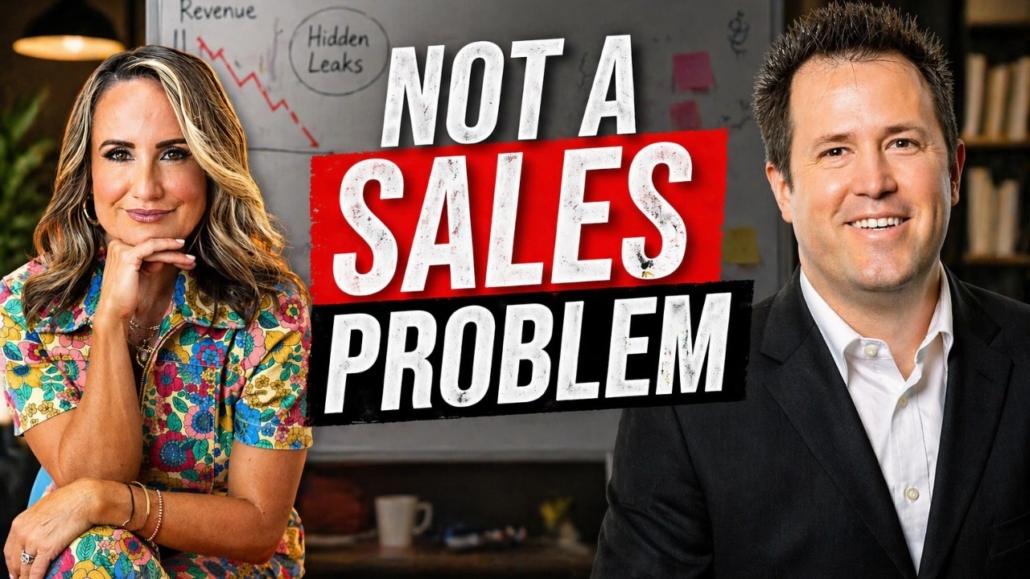
That’s the heartbeat of my recent conversation with Michelle Terpstra on her podcast Revenue Rascals, which serves ambitious founders, CEOs, and go-to-market leaders hungry for practical truth. Michelle is direct, commercially savvy, and relentlessly focused on what actually moves revenue forward. In our dialog, we covered the messy middle of scaling, why trust – not “brand” – decides most B2B deals, how AI is reshaping discovery and measurement, and what CMOs must do to earn budget from CFOs.
This article isn’t a recap. It’s my field notes on the points we pushed, the realities I’ve learned the hard way, and the systems I use when I step into a mid-market or PE-backed company as Chief Marketing Officer.
Along the way, I’ll backstop the takeaways with current external data and the operating frameworks my teams rely on. If something stings, good. The market is unforgiving; your plan should be too.
The first sign your leadership team is misaligned
When I walk into a mid-market company – even one posting strong revenue – I ask two questions:
- Can your leaders clearly explain the difference between lead generation and demand generation?
- Across marketing and revenue, how are resources split between short-, mid-, and long-term outcomes?
When I hear vague answers, or worse, three different answers from the CEO, CRO, and CMO, things are already sideways.
- Lead generation is the capture of contact information. Forms, gated content, meetings booked. It’s necessary, it’s trackable, and it’s often gamed.
- Demand generation is creating market pull and trust so buyers proactively seek you out, shortlist you, and advance faster once they do engage.
On Revenue Rascals, I put it plainly: too many teams conflate the two. Michelle pressed me to define it for her audience, and the distinction resonated because it matches how real buying happens. In high-consideration B2B, buyers carry a risk ledger in their heads. When stakes rise, they default to the “safe” brand – even if they suspect a better product exists. Gartner and Forrester have documented this for years; modern B2B buying is collaborative, risk-sensitive, and variable-length, with sellers getting a sliver of direct time and buyers relying heavily on third-party validation. (gartner.com.au)
Said differently: if you’re not one of the few brands buyers trust to “not get them fired,” most of your lead gen never had a chance.
Michelle caught that tension immediately because her audience sees it daily. She shared how customers stick with average options to avoid blame and how a single trust violation (like a supplement that doesn’t match its label) can poison the well for months. She’s right. Trust is the compounding asset that keeps your demand gen running while competitors sprint from tactic to tactic.
Trust beats “brand” – and it shows up in your pipeline
I don’t care about “brand” as a slogan. I care about trust I can measure. You earn that by consistently reducing buyer risk and friction long before your SDRs ever send an email.
- Gartner’s ongoing research on the B2B buying journey shows that buyers complete most of their “jobs” without a rep present; the task becomes enabling their evaluation with clarity, proof, and coherence. If your content increases confusion or risk, win rates drop – even if your SDR activity spikes.
- Forrester’s 2026 perspective echoes the same pattern: buying groups are expanding, trust signals beyond vendor assets matter more, and AI is accelerating early-stage research – raising the bar for consistent, verifiable claims across channels. (digitalcommerce360.com)
Your demand strategy must assume:
- The first real “conversation” happens without you.
- Your best prospects will triangulate your claims against independent sources.
- Any mismatch between your positioning and peer evidence will cost you.
This is why I push teams to map the evidence chain behind every major claim – customer proof, analyst citations, third-party benchmarks, independent reviews, and executive explainers that speak finance, legal, and security fluently. That evidence lives across your site, your customers’ voices, analyst coverage, and increasingly inside AI-generated answers that buyers consult before they ever click.

Search is now “search everywhere.” Here’s what changed – and how to measure it.
If you still think of “search” as ten blue links, you’re budgeting for a world that no longer exists. Google’s AI Overviews now appear on a large share of queries and increasingly crowd out traditional organic listings.
Multiple independent analyses show AIO presence and pixel height are rising, which directly affects clicks and visibility. BrightEdge has tracked AIO growth from ~16% of studied queries to nearly half within a 12‑month window and documented that AIOs take more above-the-fold real estate over time. Search Engine Journal has also reported on AIOs’ expanding footprint.
Two practical consequences:
- Zero-click behavior accelerates. Many queries resolve without a site visit when AI Overviews appear. This is consistent with years of “zero-click” trendlines (popularized by Rand Fishkin) and reinforced by current vendor tracking that monitors AIO-triggered queries. (en.wikipedia.org)
- Your analytics undercount and misattribute AI-influenced visits. A nontrivial portion of traffic that originates after an AI interaction lands as “Direct” in GA4 because referrers are stripped by in-app browsers, privacy features, or the tools themselves. Practitioners and vendors have begun quantifying this “dark AI” traffic and sharing patterns; several analyses show large volumes of AI-influenced visits flowing into Direct, often the majority of that segment for specific pages or time windows. Your paid channels may look artificially stronger as a result. (loamly.ai)
If you only chase last-click attribution, you’ll over-invest in channels that collect the credit and under-invest in the channels that created the conviction. That’s why I push companies to distinguish attribution from contribution.
- Attribution tells you who took the bow.
- Contribution explains who earned the applause.
In practice, this means pairing quantitative dashboards with qualitative buyer backtracking. After close, we run structured interviews: What did you consult? Which sources mattered? What reduced your perceived risk? McKinsey’s B2B work continues to show that AI, when thoughtfully deployed, improves productivity and conversion, but trust and consistency still decide the deal. You can’t See-Think-Do your way to growth if the “See” and “Think” phases are invisible in your reporting. (mckinsey.com)
Action for your team this quarter:
- Build an “AI-influenced” measurement lane. Track post‑view and post‑exposure journeys where the first signal is a Direct visit following known AI surface exposure (e.g., branded queries rising where AIOs cite you, or content that regularly appears in answer engines). Pair it with win‑loss interviews coded to evidence sources.
- Shift SEO to Search Everywhere Optimization. Optimize for YouTube, LinkedIn, Reddit, and answer engines, not just your blog. BrightEdge, Similarweb, and others now expose AIO triggers – use that data to steer topic clusters and entity coverage. (help.brightedge.com)
Lead gen vs. demand gen: why confusing the two quietly shrinks your TAM
Michelle asked me to quantify the damage when sales leaders don’t speak marketing. Here’s the pattern I’ve witnessed across mid-market B2B:
- When revenue teams define success purely by MQLs, meetings, and near-term pipeline without building market pull, they compress their reachable market. You end up fighting over the slice of buyers already “in cycle,” while the larger universe never adds you to the shortlist.
- In practice, that looks like a deceptively full funnel and a mysteriously low win rate – especially against the top three incumbents in your category.
Risk-averse buying committees choose known brands.
In high-stakes purchases, brand familiarity and perceived safety grow in importance, not shrink, as the decision nears. This isn’t theory – B2B research has linked brand sensitivity to perceived risk for years, and more recent executive surveys show the buying group’s search for validation intensifying in complex decisions. If you’re not visible and credible before procurement enters, your total addressable market might be large, but your serviceable and obtainable market is smaller than you think. (papers.ssrn.com)
Inside the company, this confusion looks like:
- SDRs blasting volume to hit activity KPIs while unsubscribes climb and domain reputation erodes.
- Email teams optimizing for opens and clicks – lagging indicators – while long-time subscribers quietly churn from your list.
- Product marketing chasing launch calendars while the market still can’t articulate the problem your product uniquely solves.
The fix starts with language and time horizons.

Operate on three clocks – and make the splits explicit
When I run marketing and revenue, we bucket resources into:
- Short term: 2–12 months (pipeline now)
- Mid term: 12–36 months (category and community effects)
- Long term: 36 months+ (brand trust, platform moves, pricing power)
Every budget meeting, every program, every quarter. If your CEO, CRO, and CMO can’t align on those splits, you’re gambling with momentum. Too many CMOs accept the default: everything becomes a 90‑day bet because comp plans and board updates demand quick wins. That’s how you end up with adrenaline and no oxygen.
Michelle pushed on this because she’s seen the fallout – email programs optimized into list fatigue, SDR teams rewarded for dials instead of outcomes, and leaders surprised by a growth stall 12 months later. She’s right. Lagging indicators make you feel productive while your market position quietly weakens.
If you’re running a 7–8 figure company, reallocate at least some capacity to mid- and long-horizon assets now:
- Evidence engines: reference architectures, ROI calculators, comparison pages, third-party validations, and customer story deep-dives that buyers can rely on during consensus-building.
- Answer assets: structured, sourced content designed to appear in AI Overviews and answer engines – covering first- and second-order questions with credible citations. (brightedge.com)
- Distribution you control: video explainers, YouTube chapters, LinkedIn carousels, and product walkthroughs that give buyers shareable artifacts for internal approvals.
Attribution vs. contribution: why your paid channels look better than they are
We talked about why last-click still dominates boardroom reporting: it’s clean. But it’s also wrong. As AI intermediates more of early discovery, the gap between what created the conviction and what gets the credit widens.
- Several vendors and practitioner communities have flagged a surge of “dark AI” visits in GA4 – sessions that follow AI interactions but lack referring data and land in Direct. Paid channels then vacuum up the attribution because they’re great at being the final click. If you react by shifting budget from demand creation to paid capture, you starve the machine that made the buyer confident in the first place. (loamly.ai)
The operating upgrade:
- Add a quarterly contribution review. Pick your last 30 wins and 15 losses. For each, reconstruct the path and annotate the evidence chain: internal assets, third-party sources, analyst mentions, customer proof, and the first moment the buyer says they felt confident. Treat it like product telemetry for revenue.
- Rebalance channel goals. Keep attribution for media buying and guardrails, but tie strategic budgets to contribution: category salience, qualified-direct growth, branded search lift where you’re being cited, and multi-session journeys that include validator content.

Budget math for CMOs: speak “controlled risk” or don’t expect a yes
Michelle asked the hard question: Why do so many CMOs struggle to secure budget?
Because most pitches read like hope with screenshots. CFOs and CEOs think in terms of controlled risk. Not everything must work – but the downside must be bounded and the leading indicators clear.
If you need headcount or dollars for an AI-influenced search plan, your board packet should show:
- A constraints model: what we will and will not do (e.g., no unsupervised AI for net-new claims; human editorial sign-off; PII and data governance guardrails).
- A ladder of proof: from pilot baselines to expansion criteria – with “off ramps” if signals fail.
- A trust map: how the plan reduces buyer risk across the six buying “jobs” that Gartner outlines, with owned and third‑party evidence artifacts to support each job. (gartner.com.au)
You’ll also earn credibility with current data, not dated playbooks:
- GenAI can raise sales productivity and conversion, but enterprise-wide adoption is still low and uneven; your plan must emphasize enablement, QA, and data hygiene as much as prompts. McKinsey’s recent B2B research is clear on both the upside and the adoption gap. (mckinsey.com)
- AI Overviews are expanding; vendors now expose which queries trigger them. Your SEO plan should include AIO monitoring, answer asset creation, and a reporting lane that accounts for zero-click.
Speak finance, or be ready to be overruled. In the podcast, I mentioned my background in financial engineering. You don’t need that degree, but you do need the mindset. Model the downside, cap the exposure, and define the leading indicators that allow a rational “go/no-go” before the quarter is over.
Short tenure pressures are real. You still have to play to win.
We also confronted the uncomfortable truth: many CMOs expect to be replaced within 18–24 months, so they optimize to survive, not to win. The data continues to show stubbornly short tenures among top CMOs of large companies – roughly four years on average, varying by sector – which feeds this defensive posture. (adweek.com)
Here’s my take: you’re paid to build a system that compounds after you. If you don’t force the three-horizon resource split, define contribution metrics, and install a trust-building evidence engine, you’re not doing the work – even if you hit this quarter’s pipeline number.
That’s servant leadership. Shift resources from activity for activity’s sake to outcomes tied to customer success, expansion, and pricing power. It’s how you create momentum that outlives any single leader.

Revenue is adrenaline. EBITDA is oxygen.
Michelle asked me to unpack a line I use with founders and boards: “revenue is adrenaline; EBITDA is oxygen.“
Revenue spikes feel great. They aren’t all created equal. If you can’t breathe – if profitable growth keeps slipping 90 days into the future – your company is starving.
We discussed a streaming-adjacent SaaS model I advise where top-line GMV looks huge, but 90–95% of that is a pass-through to creators – meaning the “real” revenue is the take rate, not the flashy gross number. Sales teams are often comped on the big figure; the business survives on the small one.
So, I prefer comp plans for CROs and CMOs that blend top-line and EBITDA contribution. You drive different behavior when leaders know their decisions must improve unit economics, retention, and expansion, not just today’s bookings.
The corollary: churn reviews are a revenue meeting, not just a CS meeting. When a big account leaves, run the contribution autopsy:
- Did sales sell vapor?
- Did product fail to deliver?
- Did marketing set the wrong expectation?
- Did onboarding drop the baton?
You can’t fix what you won’t diagnose.
Founder-led sales: don’t hand off and disappear
I’ve helped many founders exit the sales seat. The pattern Michelle sees – and I agree – is that founders leave too early and too completely once they hire the first AE or BDR team.
Don’t do that. If you were the closer that got the company to $15M, stay in the trenches for a slice of time:
- Take a few calls monthly.
- Review and annotate recorded discovery and demos.
- Handle five support tickets yourself.
- Call two churned customers and listen.
Your team learns more from watching you handle real objections than from any SOP. It keeps your instincts sharp, and it stops the slow drift where messages lose their teeth and your win rate quietly decays.
AI in the sales stack: hybrid beats hype
We swapped stories about AI in outbound sales. Michelle has run hybrid BDR teams where AI agents capture the easy wins and human reps handle the complex conversions. Done right, this trims headcount without trimming quality.
My rule: AI is a force multiplier, not an unsupervised closer. Push it into research, personalization scaffolding, call summaries, and editorial augmentation. Keep humans in the loop for net‑new claims, competitive traps, and business case negotiation. McKinsey’s recent work is clear – AI lifts productivity and conversion when properly integrated into workflows and QA, but adoption at full scale remains low. Translation: the edge goes to teams that operationalize before they evangelize. (mckinsey.com)
On content, a lean team with the right guardrails can outperform yesterday’s 30‑person department. I’ve run large editorial groups; with modern tools, I can do the same work with two or three editors – but only if you set brand, sourcing, and QA rules that prevent “AI slop.” Structure matters. Editorial judgment matters. Your brand equity depends on it.
And one more compliance note Michelle raised: New York enacted a law requiring disclosure for AI-generated “synthetic performers” used in advertising. If you use AI-generated humans in creative and run campaigns that reach New York, you’ll need to disclose in the ad itself. Expect more jurisdictions to follow, much like the FTC’s ongoing enforcement of clear-and-conspicuous ad disclosures in social media. Build these requirements into your production process now. (natlawreview.com)
The messy middle: how to get unstuck in 90 days
If you’re a CEO or PE partner staring at decent top-line growth and nagging doubts, here’s the 90‑day playbook I run as CMO.
- Align the clocks
- Establish explicit resource splits across 2–12, 12–36, and 36+ months.
- Tie every program to an outcome and a leading indicator. If we can’t define both, it waits.
- Map the evidence chain
- For your top five offerings, list the proof required for a risk-averse buying group: technical, financial, security, compliance, peer validation. Assign owners and gaps.
- Build a distribution plan that makes these assets discoverable in search, social, communities, and answer engines.
- Separate attribution from contribution
- Keep last‑click for media ops; adopt contribution reviews in pipeline and win/loss.
- Add an “AI-influenced” lane in reporting. Watch branded search, qualified-direct, and AIO citation footprints alongside revenue.
- Fix GTM language debt
- Standardize definitions for lead gen vs. demand gen, pipeline stages, and SQL/SAO criteria. Train the whole company.
- Require outcome statements from every role: what business result does this work produce, and how does it connect to EBITDA?
- Tune the SDR/BDR system
- Replace activity-only targets with outcome targets: qualified meetings held, stage advancement, and multi-threaded engagement.
- Pilot a hybrid AI + human workflow with a tight QA loop. Scale only when the leading indicators hit your bar.
- Founder shadow program
- Put the CEO or founder on two calls a month. Review recordings in a weekly deal lab.
- Add a churn council: last 10 churns, root cause by function, remediation plan.
- Prep the board packet in CFO language
- Present bounded downside, kill-switch criteria, and ROI windows for each investment.
- Anchor to McKinsey/Gartner/Forrester data on where buyers evaluate today and how AI is shaping discovery, trust, and complexity. (mckinsey.com)
Do this with a servant-leader posture. Remove friction for your teams. Celebrate progress loudly. Shut down low‑contribution activity quickly. The culture that forms around this cadence is the true moat.

Why I keep using the word “oxygen”
I’ve helped take companies public and scale to large exits. The system that endures balances adrenaline and oxygen. It creates momentum that shows up in:
- Higher qualified-direct traffic and branded search, even as zero‑click rises.
- Faster stage progression because buyers already trust your claims.
- Lower CAC payback because your demand engines do compounding work.
- Healthier EBITDA because pricing and expansion improve when buyers believe.
One more pragmatic note on leadership tenure. Yes, CMO seats turn over; Spencer Stuart and coverage around their annual study put average tenures near the four‑year mark among large companies, with sector variance. Don’t let that push you into short-termism. Your job is to leave a system behind – one that keeps compounding even if you’re not there. (adweek.com)
A word about Michelle and the Revenue Rascals audience
Revenue Rascals is aptly named. Michelle’s listeners are hands-on leaders who don’t want theory; they want moves that will stand up in a board review and still work six quarters later. She pushes guests to define terms, connect the dots, and show their work. In that environment, the truth lands harder: the handoffs between sales, marketing, finance, product, and success are where most companies bleed out. Her community knows it – and they’re ready to fix it.
A few of my lines resonated because they came from scar tissue, not a slide:
- “AI is probably gonna take your job” – if your output is average and your standards are low.
- “Revenue is adrenaline; EBITDA is oxygen” – because survival is about breathing, not rushing.
- “Speak each other’s language” – or watch your TAM shrink under your nose.
Final takeaways you can act on this week
- Replace “brand” with “trust” in your dashboards. Measure the evidence buyers rely on, not how often you post.
- Build a Search Everywhere plan that includes answer engines and AIO monitoring. Expect zero‑click to rise; design for contribution, not just attribution. (brightedge.com)
- Force the 2–12, 12–36, 36+ split in your budget. Short-term-only portfolios underperform when markets shift.
- Give your SDRs outcome goals, not just dials. Pilot AI for triage; keep humans for complex conversion.
- Review the new disclosure rules if you use AI-generated humans in creative, especially for New York reach. Update your ad ops checklist accordingly. (natlawreview.com)
- Prepare your next board ask in CFO language: controlled risk, bounded downside, leading indicators, and kill switches.
If you’re an executive, investor, or operator wrestling with these shifts, let’s connect. I build go-to-market systems that create momentum you can feel – and measure. The right next step is usually smaller than you think, and it starts with insisting on outcomes, not activity.
Take one of the actions above this week. Then take another next week. Momentum compounds. So does trust. And trust is how you win.

Kurt is a globally-recognized 10x marketer, operator, and speaker. He has built and run early-stage companies as well as those over $1B in annual revenue, assembled teams across six continents, been part of the small team leading an IPO ($880M), and participated in dozens of acquisitions. His unique experience being inside hundreds of high-growth companies with the opportunity to analyze, scale, make changes of leadership, and oversee operations has labeled him “the king of scaling companies”. This has enabled him to advise thousands of leaders, from startup founders to the President of the United States.
Related Posts

Pictures from the Journey
Should You Attend a Center for Servant Leadership: 5 Compelling Reasons
The 16 Top Servant Leadership Books for High-Growth Leaders


